

How to Get More Out of PLO Genius
Get more out of your PLO Genius study sessions with these practical tips.
How Rake Changes Your PLO Preflop Strategy: Low vs. High Stakes
Does higher rake mean you should play tighter in PLO?
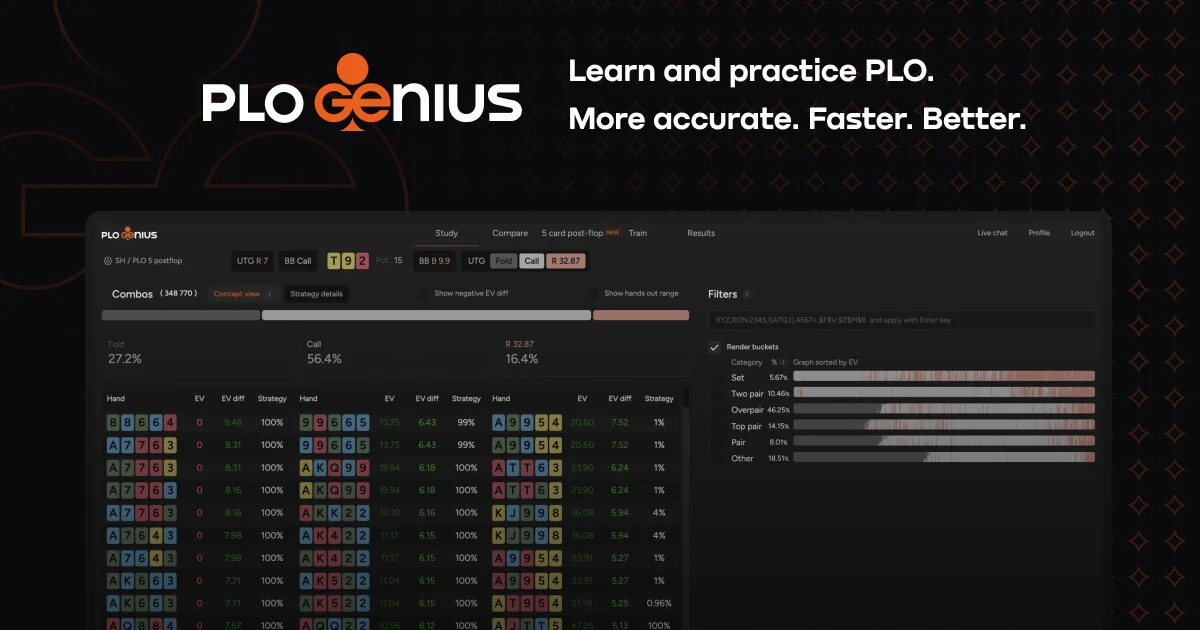
PLO Genius Changelog
All PLO Genius updates since January 2025, month by month: new libraries, features and fixes.

How Stack Depth Affects PLO Preflop Strategy
What changes preflop when stacks go from 100bb to 200bb in PLO: RFI, 3-betting in and out of position, with numbers from the Compare tool.
Same Hand, Different Table: What Actually Changes Your PLO Strategy
Same hand, different rake or table size: the Compare tool shows which hands change their preferred action and by how much EV, with a PLO50 vs PLO5000 example.
From PLO to PLO6: What Extra Hole Cards Can Really Change
Same flop, three formats. What extra hole cards change in range composition and c-betting from PLO to PLO5 and PLO6, with solver numbers.
Big Blind Preflop Strategy: Part 2 – Defending vs Button Opens
Facing a Button open, the Big Blind defends nearly twice as many hands as against UTG. Here is how each hand category responds.
Taking Your First Steps in PLO MTTs
As the PLO tournament scene grows, stay one step ahead.

Big Blind Defense vs UTG in PLO: Preflop Guide
Against a UTG open at 100bb and high rake, the big blind defends only 17.5% of hands. Category by category, here is what to call, what to 3-bet and what to fold.

Study PLO Smarter with Aggregate Reports
Instead of one flop at a time, review whole board groups: c-bet frequencies and sizing across 217 Ace-high boards and the straight boards where the Big Blind leads.

How to React to 4-Bets in PLO
The last part of the 3-bet and 4-bet series: what continues against an AA-heavy 4-bet range in PLO at 100bb, and what folds.

Approaching 4-Betting in PLO
Is 4-betting only Aces enough? A look at solver 4-bet ranges from UTG and the Cutoff at 100bb, and what to add beyond AA.

How to Defend vs 3-Bets Out of Position in Pot Limit Omaha
Solver baseline for the open-raiser facing a 3-bet out of position in PLO, category by category, plus practical adjustments against AA-heavy ranges.

Learn From Your PLO Hands!
Upload your hand histories, see where your decisions diverged from GTO and by how much, and open the exact solver node in one click.

How to React Versus 3-Bets When You’re in Position
Reacting to an out-of-position 3-bet when you hold position in PLO: what calls, what 4-bets, and where to stay disciplined against AA-heavy ranges.
Squeezing in PLO
Squeeze ranges in PLO from the Small Blind (up to 4.4% of hands) and the Button (about 5%), with the logic behind them and where to push wider.
Out of Position 3-Bets in PLO: When and How to Apply Pressure
How often to 3-bet from the blinds, why the small blind gains more from it than the big blind, and which hands make the cut vs early position and vs the button.

3-Betting IP in PLO: Ranges, Logic, Adjustments
Which hands 3-bet in position in PLO, position by position, and how to adjust when opponents underfold.
Full All-in or Fold Strategy Library – Now Live in PLO Genius!
All-in or Fold PLO has one decision per hand, yet the spots are far from obvious. The PLO Genius library covers every one of the 1,755 flops at 5 to 20bb stacks.

Small and Mid Stakes PLO: What Actually Matters in 2026
Equity awareness, patience, stack depth, thinking beyond the current street and consistent study: what actually matters at small and mid stakes PLO in 2026.

What's the Deal with Double Board PLO (and Bomb Pots)?
Two boards, one pot, no preflop in bomb pots. The key concepts that separate double board PLO from the regular game, from card removal to when to pull instead of push.
Poker Tools to Improve Your PLO Skills!
Equity calculators, trackers and solvers each add a different layer to your PLO understanding. A short guide to what they do and which to open first.
What Can You Expect from Your First Pot Limit Omaha Live Game?
Live PLO is looser, deeper and more multiway than online 6-max. Here is what changes at the table and how to prepare for it.
Cold Calling the Small Blind and the Big Blind
The Small Blind plays 3-bet or fold; Big Blind vs Small Blind is the one blind battle you play in position. Ranges for both.

Navigating the Small Blind Preflop in Pot Limit Omaha
Out of position by default and half a blind already in: how to build a small blind opening strategy in PLO and adjust it to the big blind's tendencies.
How Wide Can You Open Preflop in PLO?
Solver opening ranges by position at 100bb, why the worst GTO-approved hands are folds in early position, and how often you should win the pot preflop.

Master Your Pot Limit Omaha Skills: It All Starts Preflop
Test your PLO skills quickly and efficiently with our GTO trainer.
Study PLO Wisely!
Make time spent studying PLO a time well spent.

Pot Limit Omaha: Should You Go GTO or Exploitative?
GTO can't lose, but it isn't the highest-EV strategy either. Here is how to learn the equilibrium and adjust it to what your opponents actually do.

What Is Equity Realization and Why Does It Matter in Pot Limit Omaha?
Having equity is not the same as realizing it. The factors that decide equity realization in PLO, with the SPR numbers worth remembering.
What's the Logic Behind C-Betting in PLO?
Continuation betting in PLO follows the same logic as in Hold'em but with more callers, closer equities and a bigger role for position. Here is how to build your c-bet strategy.

Bankroll Management & Variance in PLO. What Should You Expect, and How Should You Prepare Yourself?
PLO variance is higher than in other formats. Here is what a 10,000-hand sample can look like, why 100K+ hands matter, and how many buy-ins to keep.
Omaha Best Starting Hands. A Quick Guide
Over 270,000 starting hands and no simple chart. Three criteria, nuttiness, connectedness and suitedness, tell you which ones are worth opening.
Should Rake Influence Your Poker Game? Pot Limit Omaha Edition
Rake is a fee on every pot you play. It changes the equity you need to call, and it changes which hands are opens, 3-bets and folds. Here is the math and the strategy.
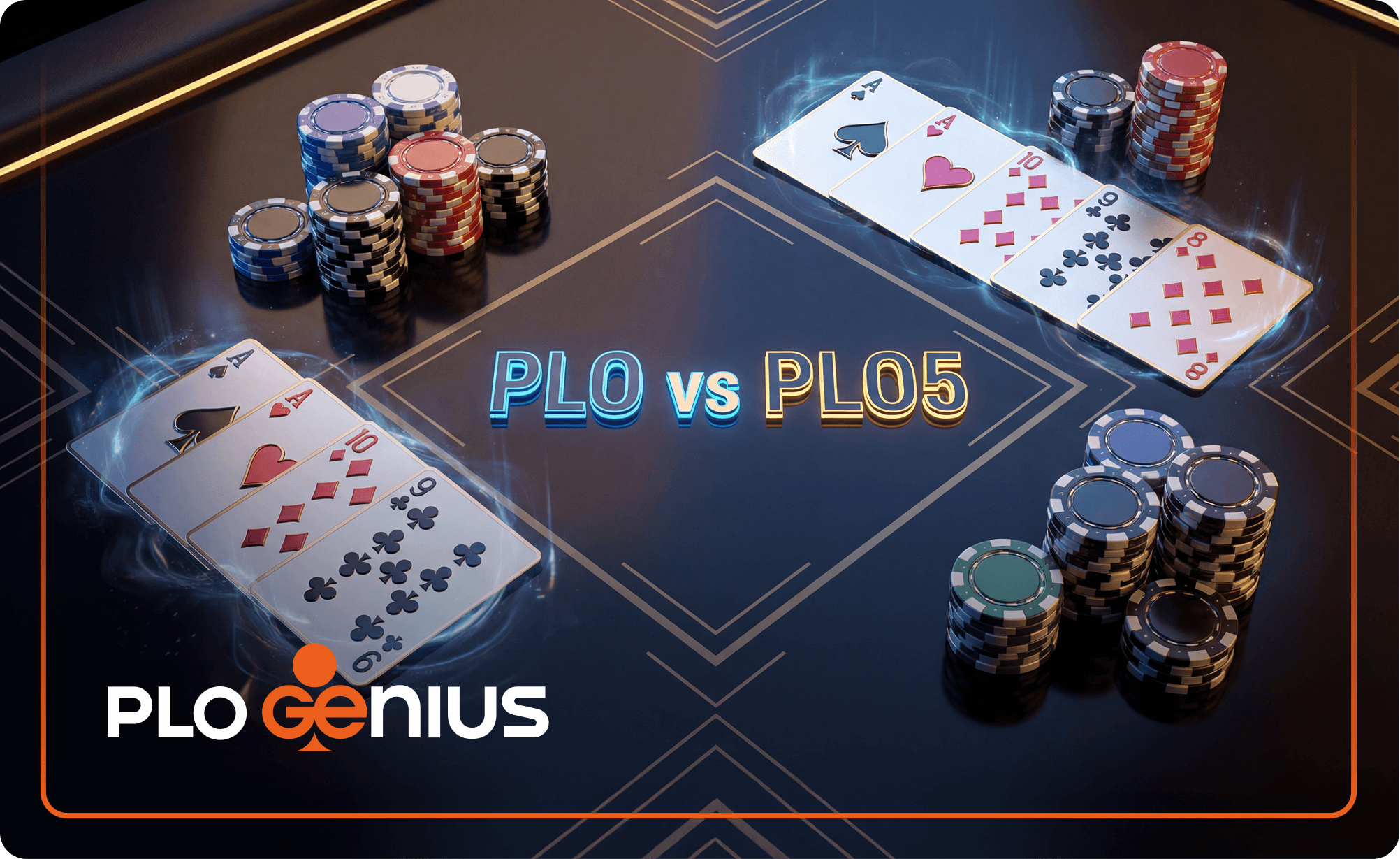
How Does PLO5 Preflop differ from Four Card PLO?
See how PLO5 preflop play differs from four card Omaha and what adjustments you need to make.
How to Play Multiway Pots in Pot Limit Omaha
You need more equity to continue against three players than against one. Here is how hand selection, position and nut draws change in multiway pots.

Should You Cold Call In Your PLO Games?
Cold calling is a legitimate part of PLO preflop strategy, but only with the right hands and in the right context. Here is what to weigh, including the rake.

PLO Poker Strategy: How to Play Kings and High Pairs
Kings look strong in PLO but rarely justify heavy preflop commitment. What decides their value is the side cards and who is putting in the action.
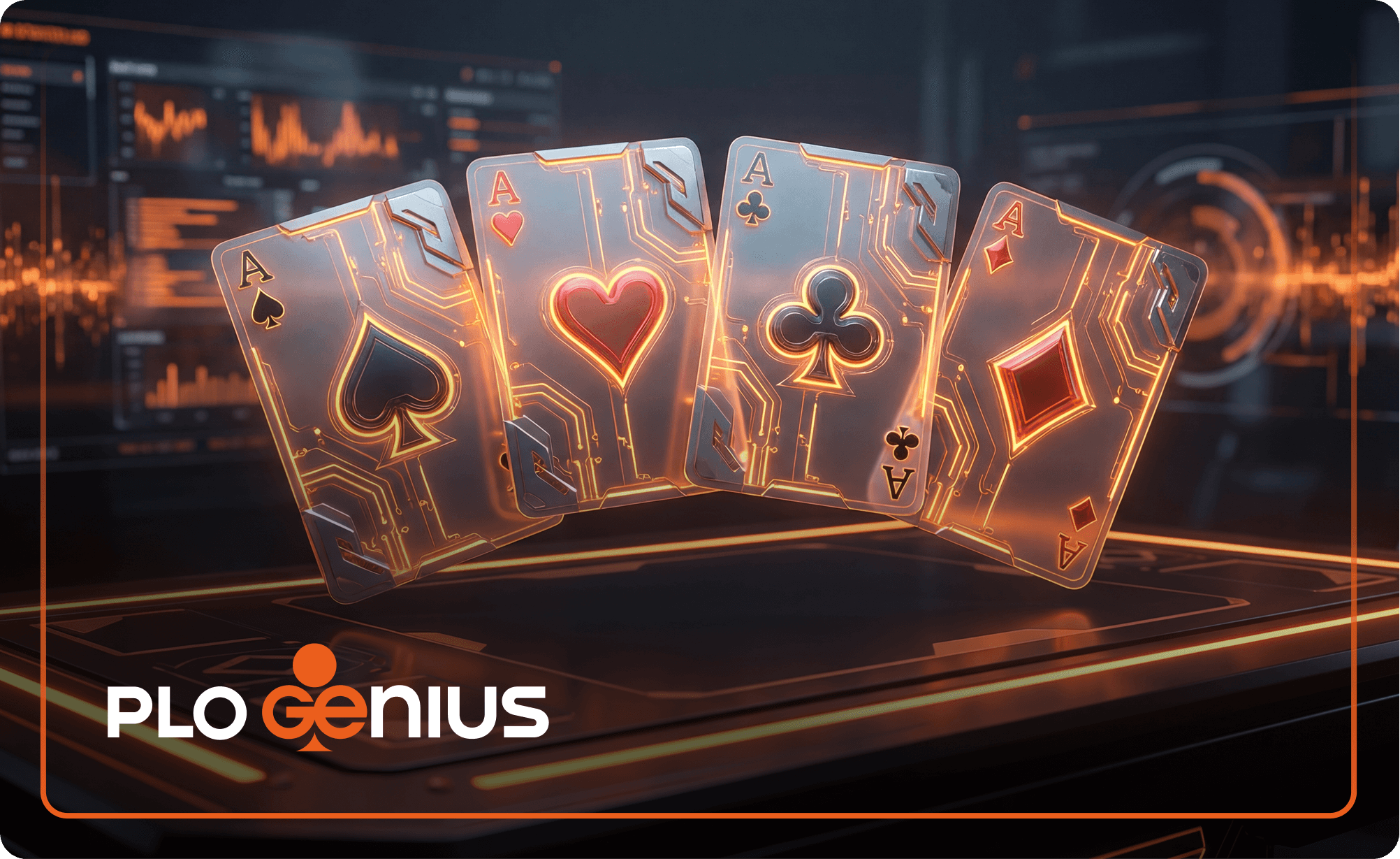
PLO Preflop Strategy: How to Play Aces the Right Way
PLO has 6,961 AAxx combinations, from AAAA to AAKK double suited. Here is when to raise, when to flat instead of 3-betting and why you should 4-bet Aces out of position.

Common PLO Mistakes and How to Avoid Them
Most newcomers bring Hold'em habits to Omaha. Here are the four that cost the most and the preflop discipline that prevents them.

Pot Limit Omaha — What Does Pot Limit Imply
The "pot limit" part of Pot Limit Omaha decides how big you can bet. Here is the math, preflop and postflop, in big blinds.
